
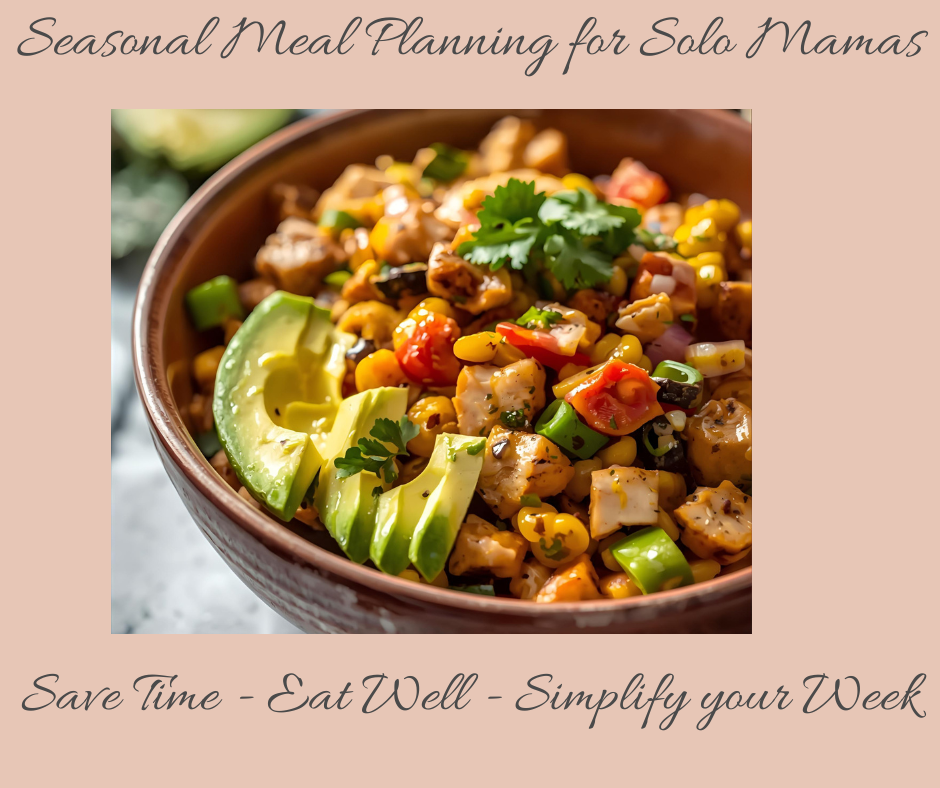
How to Meal Plan as a Solo Mama
As solo mamas, we carry a lot — from school drop-offs to bedtime stories, and everything in between. We want feeding ourselves and our kids to feel nourishing, but often it turns into one more stressful task on an endless to-do list. That’s why I love seasonal meal planning.
By aligning meals with the seasons, you save time, reduce costs, and naturally bring more variety to the table. Even better? It makes life simpler. With a few gentle systems, meal planning can shift from overwhelming to grounding — giving you back energy for the moments that matter most.
Why Seasonal Meal Planning Works for Solo Mamas
- It saves money. Seasonal produce is cheaper and fresher, so you stretch your grocery budget without sacrificing quality.
- It simplifies decisions. Instead of scrolling endless recipes, you focus on what’s abundant right now.
- It keeps meals fresh and fun. Rotating with the seasons means you’re not stuck in the same food rut all year.
- It reduces food waste. When you plan around what you already have and what’s in season, you’re less likely to have food waste.
- It honors your energy. With systems in place, you spend less time stressing about “what’s for dinner” and more time connecting with your kids.
How to Start Seasonal Meal Planning for Your Family
There is a wealth of resources out there on meal planning – it can really feel overwhelming! I’ll give you some of my favorites – all of these have weekly newsletters available that include weekly meal plan ideas and incorporate seasonal rotations.
- New York Times Cooking : requires subscription, SO MANY recipes, thousands of reviews and comments to guide you.
- Real Food Whole Life : focus on easy meals, lots of one-pot meals and slow cooker meals.
- All the Healthy Things : simple, healthy and delicious recipes.
- Pinch of Yum : simple and tasty recipes.
I have used Pinterest over the years to organize my favorite recipes by season and I recommend starting some type of organization for the recipes you know and love. As you accumulate recipes into different categories, this can really help out with decision fatigue – especially at those busy or low energy times! *Tip: include categories such as “NO COOK” or “Dump and Go”
Step 1: Anchor Your Week with Intention
The first step to simplifying meal planning is creating intention for your plan. Set yourself up for success by being realistic about what you do or don’t have time for (or want to have time for) as you’re planning. I really enjoy cooking, but every once in a while – I just need a break! This isn’t about burning yourself out trying to get a homemade dinner on the table each night. It’s about incorporating your whole life into the plan and being able to move through your week with ease.
- What do your activities look like for the week? How many nights will you be home?
- How is your energy? How many meals / what type of meals do you feel you have the capacity to prep?
- low energy / capacity week – what’s in the freezer? what can you get pre-prepared or take-out? what “no-prep” meals do you have available? *See full Low Energy Meal Planning post
- high energy / capacity week – what extras can you do to help you future you on a low energy week?
- mid-range / average week – plan to make just enough to get through the week
- How much time do you have to meal plan? Not much time? Pick tried and true recipes.
- What perishable items do you have on hand that need to be used?
Step 2: Choose 2–3 Batch Meals
As a solo mama, cooking daily from scratch can feel impossible. Instead, pick 2–3 meals per week to batch cook — then stretch them into leftovers.
- Make a salad for lunches on work days.
- Cook a pot of soup → serve for lunch and dinner across 2–3 days.
- Make a pasta dish, keep the sauce separate and cook only the noodles you need for one night to keep is tasting fresh.
This is where seasonal eating shines — those veggies and flavors shift naturally every few months, so your meals stay fresh without reinventing the wheel.
Step 3: Keep a Pantry List
Alongside fresh produce, stock a simple pantry list of staples you use year-round. Having a “backbone” of ingredients on hand means you’re never starting from zero. Keep an ongoing grocery list accessible (for me, this is on my phone in the reminders app); add pantry staples to the list as you use them.
- Proteins: Canned beans, lentils, eggs, chicken breast, salmon.
- Grains: Rice, quinoa, oats, pasta.
- Flavors: Olive oil, vinegars, soy sauce, garlic, onion, spices.
- Extras: Nut butter, canned tomatoes, broth, salsa.
Then, simply layer in whatever’s fresh and seasonal.
Step 4: Simplify with Systems
The secret isn’t just what you eat — it’s the gentle systems behind it. This is where you’ll need some experimentation with what works for you. Here are some examples that are currently working for me:
- Spread meal prep across 2-3 days: prepping everything in one day can feel like a marathon, and then you get to follow up with a sink full of dishes. I try to cook one meal on Saturday (dinner, with leftovers), and two meals on Sunday (breakfasts and lunches for workdays), then one day during the week I will cook an easy meal – 20 min one-pot meal or a slow cooker dump and go situation.
- Ready to go Snacks: Wash and cut fruit, veggies, cheese, so they’re ready to go for snacks.
- Smoothies: prepping smoothies in advance has been a life saver for our family. Make a big batch smoothie on the weekend, drink some and freeze some in pouches. I’ll transfer a pouch from freezer to fridge in the evening and it’s ready to go for a breakfast on the go or after school snack for my child.
These little rituals are investing in future you. Thursday Mama is going to be so grateful Sunday Mama took some time to cook that meal and wash the fruit!
How to navigate “particular” toddler habits
One of my main goals with meal prep as my daughter started eating was to avoid the trap of cooking two separate meals – one for me and one for her. From the beginning, I have tried to feed her whatever I cook for myself. If the meal is chicken, mashed potatoes and broccoli – she gets everything just like me. Sometimes she will only get parts of the meal – for example if I’m making a “southwest chicken salad”: she will get a plate of salad components that I think she would eat – chicken, avocado, black beans, corn, and maybe some sour cream for a sauce. I get to enjoy my salad with spicy chipotle salad dressing, and she still gets a balanced meal using all the same ingredients.
For those with children that have very strong preferences about what they will eat, I see you. This is a very challenging season to navigate. I have gone through phases of food refusal with my daughter (sometimes even refusing foods I have considered her favorites!). In these times, I serve her dinner as usual and keep my boundary “this is what’s for dinner tonight, it’s your choice what you eat and how much.” If she ends up completely refusing dinner, I will later offer a bedtime snack of yogurt or a bowl of cereal with milk.
Remember, living the soft life is not about perfection. It’s about finding a balance where you can find a flow that feels peaceful for your family. Sometimes that could mean a week of chicken nuggets and hamburgers so that mama can get a mental break, reset, and try again the next week!
How Meal Planning Creates a Softer Life
At its heart, seasonal meal planning isn’t just about food — it’s about building a life that feels rooted, simple, and nourishing. When meals are planned and prepped, evenings shift from chaos to calm (or maybe just slightly less chaos). You sit down with your child, share food, laugh together, and end the day with connection rather than exhaustion. And if you’re lucky… they might even eat!
That’s the essence of the soft solo mama life: making gentle choices that give you more room for joy.
Final Thoughts
Meal planning doesn’t have to feel rigid or overwhelming. With a seasonal approach, it becomes fluid and supportive — a rhythm that saves time, reduces stress, and keeps you and your family nourished.
Start small: choose two seasonal batch meals this week, simplify your grocery list, and notice how much lighter dinner feels. Soft living can start now, one intentional choice at a time.

I really liked the ‘How to navigate “particular” toddler habits’ section. This really resonated with me.